
Ancient History of Nepal: A Discourse
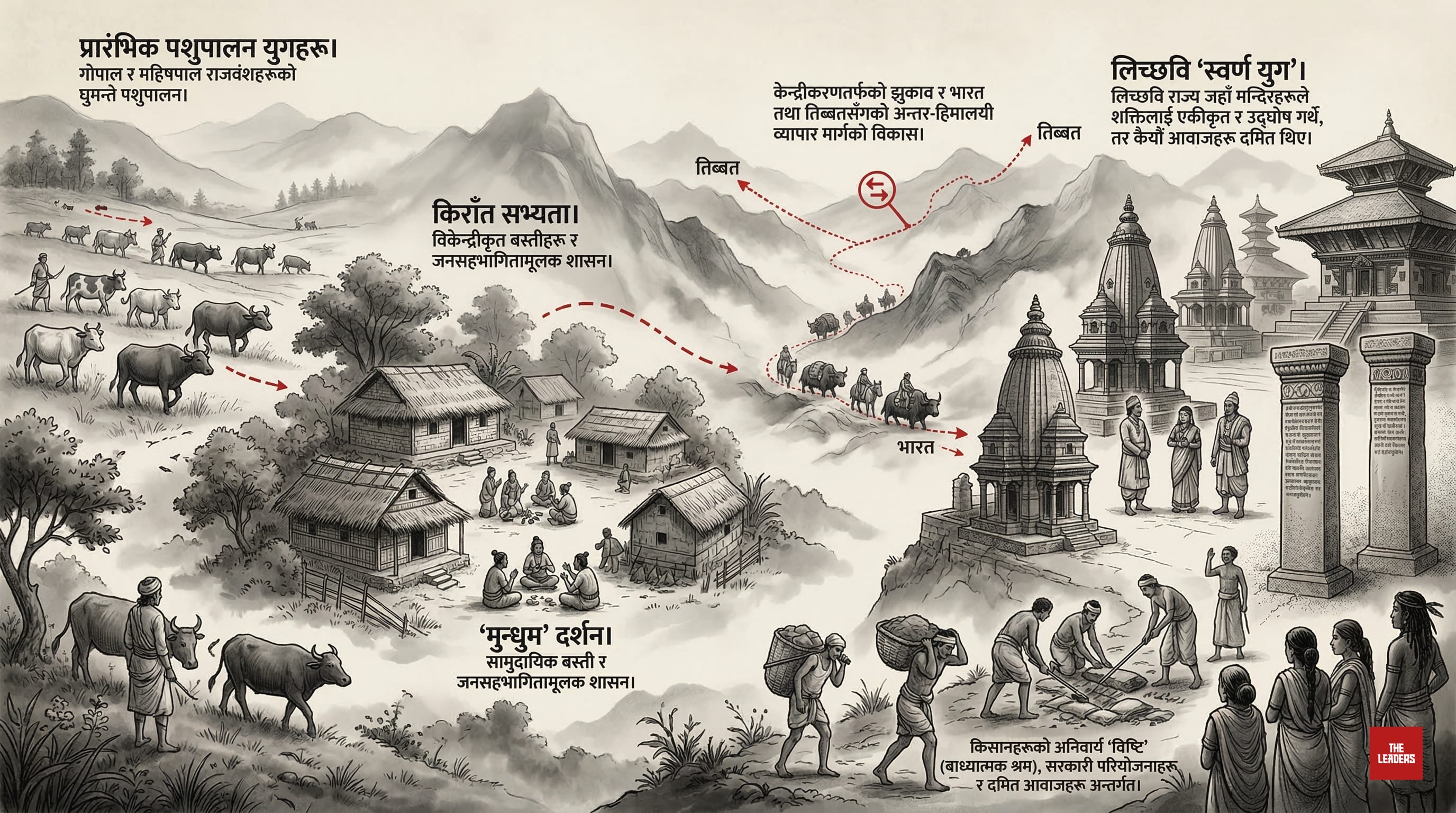
This article serves as a conceptual discourse, analyzing Nepal’s ancient history not merely as a collection of royal genealogies or chronological dates, but as a profound conflict between power, geography, economy, and memory. It encompasses the developmental trajectory starting from the nomadic pastoralism of the Gopalas and Mahishapalas to the decentralized practices of the Kirat civilization, which were rooted in "Mundhum" philosophy and grassroots participation. Furthermore, it dissects the political-economic reality of how the Lichchhavis—bolstered by the unprecedented expansion of trans-Himalayan trade—laid the foundations of a centralized monarchy based on a rigorous taxation system and Bishti (forced labor). By unearthing the silenced voices of grassroots farmers, women, and displaced indigenous communities buried beneath the luster of "Golden Age" Lichchhavi inscriptions, this article opens a gateway for intellectual reflection to understand the political and civilizational identity of modern Nepal through a new lens.
Read Lead Story