The Leaders

Loading The Leaders

v1.7.0© 2026 The Leaders

Nepal's Political Record • Documented for the Public

THE
LEADERS
LIVE
UPDATING
HISTORY
PROJECT
Active Tracking

The bold decision makersTHE LEADERSShaping a nation's destiny

Discover the visionaries, revolutionaries, and statesmen who shaped the destiny of a nation.

Profiles & Dossiers

The Pillars

The foundational figures of Nepal's political journey. Their decisions shaped the nation for generations.

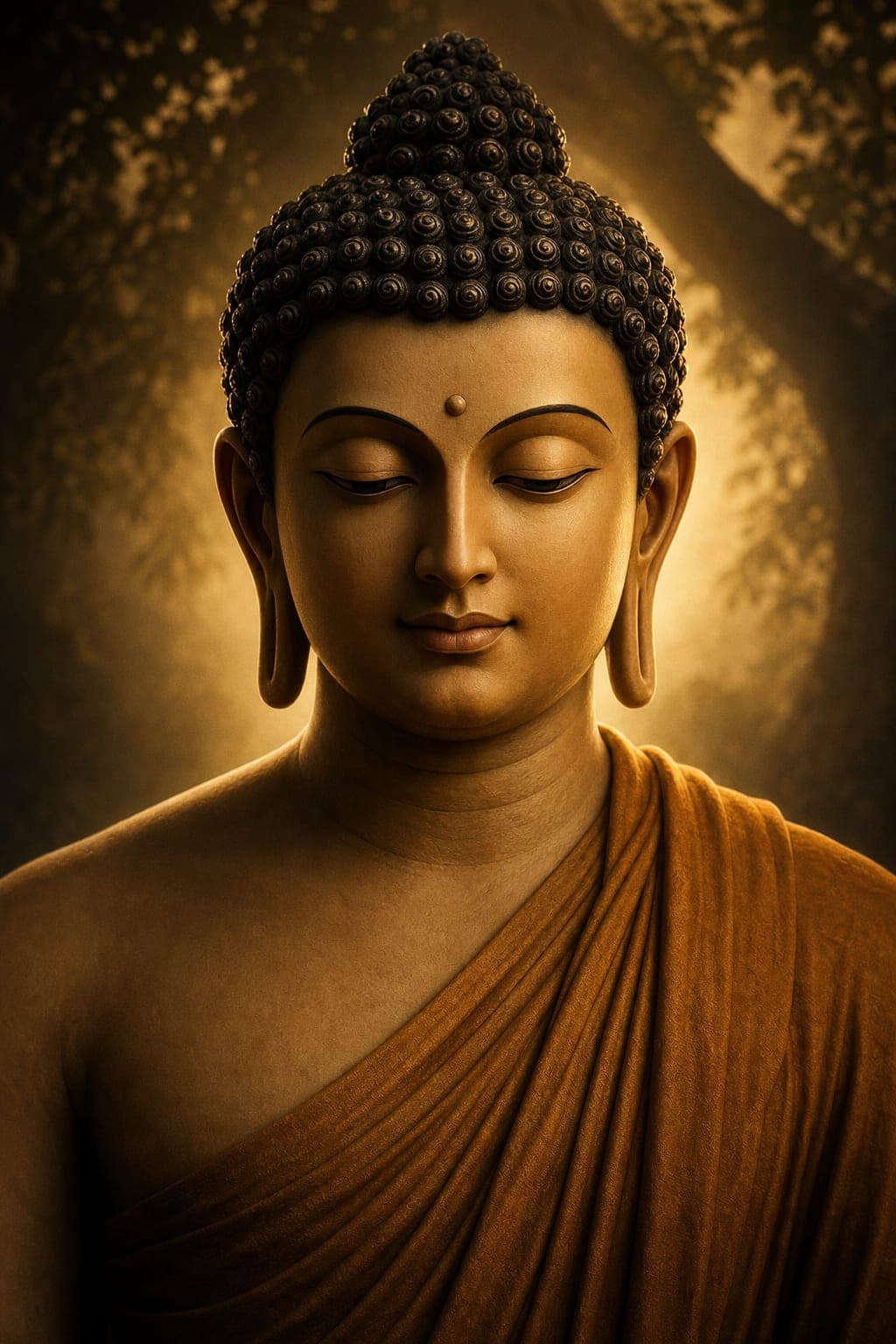
Gautam Buddha
Gautam

Founder of Buddhism & Spiritual Awakener of the World

Gautam Buddha

The Supreme Buddha who transformed human consciousness itself, born in Lumbini, Nepal, who renounced princely luxury to discover the path to universal liberation. His teachings on suffering, enlightenment, and the Middle Way spawned the world's largest religions and fundamentally altered the spiritual trajectory of billions across Asia and beyond.
Read Full Profile
Browse Leaders

Editorial Archive

Analysis & Perspectives

Long-form political analysis, historical deep-dives, and editorial essays from The Leaders archive.

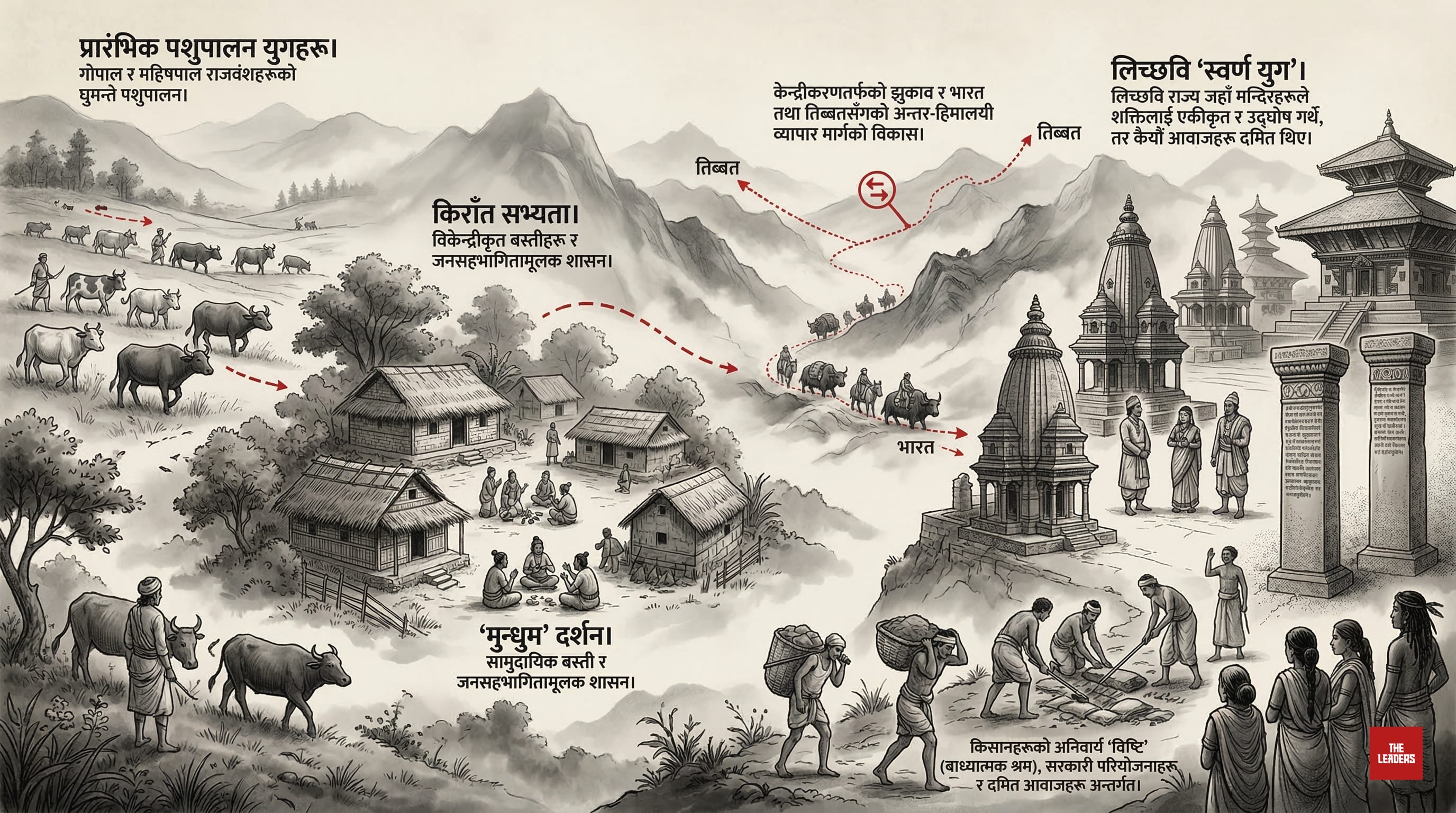
Ancient History of Nepal: A Discourse
History

Ancient History of Nepal: A Discourse

This article serves as a conceptual discourse, analyzing Nepal’s ancient history not merely as a collection of royal genealogies or chronological dates, but as a profound conflict between power, geography, economy, and memory. It encompasses the developmental trajectory starting from the nomadic pastoralism of the Gopalas and Mahishapalas to the decentralized practices of the Kirat civilization, which were rooted in "Mundhum" philosophy and grassroots participation. Furthermore, it dissects the political-economic reality of how the Lichchhavis—bolstered by the unprecedented expansion of trans-Himalayan trade—laid the foundations of a centralized monarchy based on a rigorous taxation system and Bishti (forced labor). By unearthing the silenced voices of grassroots farmers, women, and displaced indigenous communities buried beneath the luster of "Golden Age" Lichchhavi inscriptions, this article opens a gateway for intellectual reflection to understand the political and civilizational identity of modern Nepal through a new lens.

Mar 16, 20261 min
Read Story
The Leaders
Politics
Jan 28, 20261 min

The Leaders

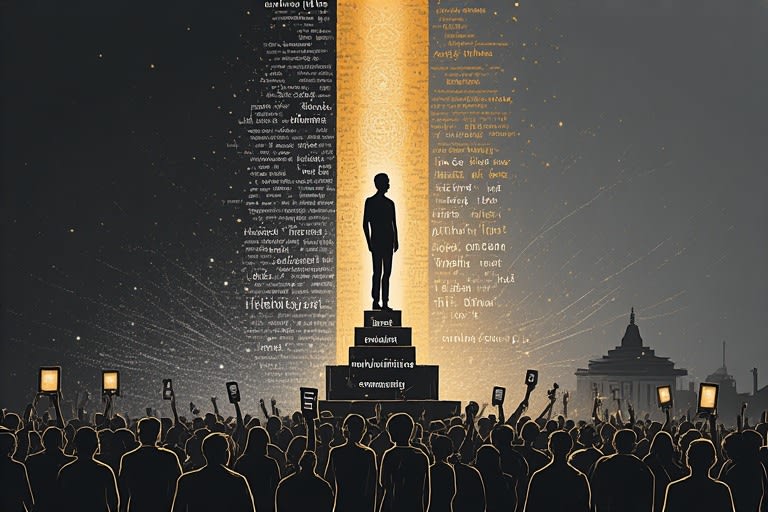
True leadership is defined not by authority or titles, but by a relationship of trust earned through direction, alignment, and commitment. Globally, people value leaders who exhibit self-control, integrity, and transparent communication, viewing a leader’s ability to govern themselves as a prerequisite for governing others. In Nepal, these universal traits blend with the cultural concept of dharma, where leaders are expected to be righteous guardians of a diverse community. However, a significant gap exists between this ideal and the reality of political corruption, leading to a "crisis of legitimacy." This friction peaked in the 2025 youth-led protests, where Gen Z demanded a shift toward digital transparency, personal "cleanliness" from corruption, and inclusion, proving that while authority can be assigned from above, true leadership must be granted from below.

Read Story
Manifesto Experience

Side-by-Side Edition

We do not inherit the earth from our ancestors...

...we borrow it from our children.

Active Manifesto Premise

Political memory must stay public.

We preserve records so citizens can compare promises with outcomes, year after year.

— The Leaders, 2026

Open Manifesto Library

Civic Signal Core

The Leaders logo
Historical Archives

Nepal's Political Timeline

Trace the key eras and turning points that shaped Nepal from ancient kingdoms to a federal republic.

Before 1769

Ancient Kingdoms

The rise of early dynasties and the political groundwork that preceded modern Nepal.

Explore
1769-1846

Shah Dynasty

The consolidation of the Shah state and the expansion of unified rule.

Explore