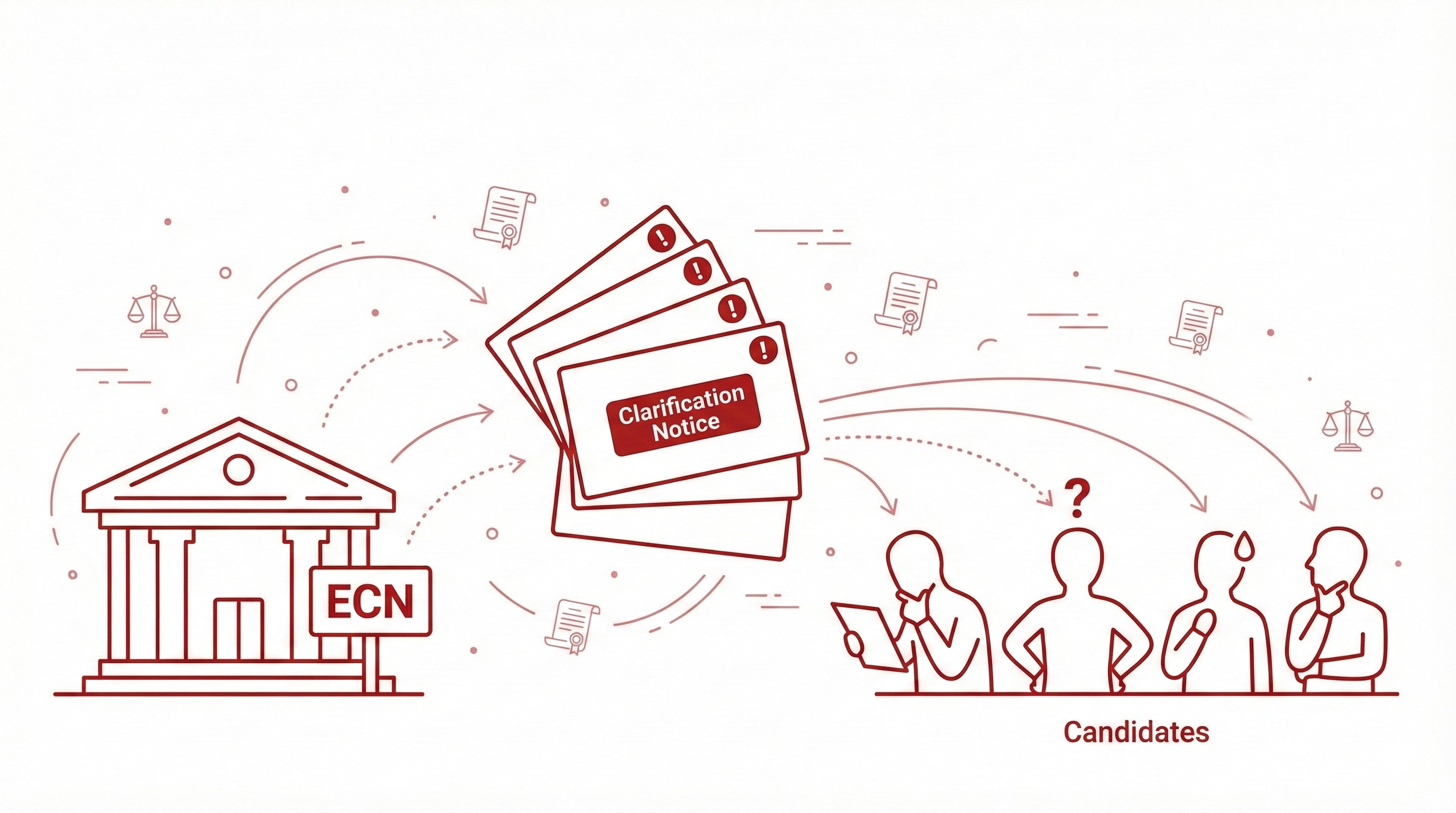
New figures from the Election Commission (EC) show a significant expansion of enforcement activity under the Election Code of Conduct, 2082, for the March 5 House of Representatives election.
The Rising Nepal reports that by late January the EC had already sought 21 clarifications from political parties, individual candidates, government agencies and social organisations for alleged breaches of the code. More recent coverage by NepalNews and other outlets indicates that at least nine additional individuals have been added to the list, taking the total number of notices beyond 30.
Cases range from the alleged use of threatening language by Rastriya Swatantra Party candidate Hemraj Thapa in Bajura, to controversial remarks by Banke-3 candidate Khagendra Sunar about the national animal cow, to online comments and campaign behaviour by several prominent figures. In many instances, the EC has invoked provisions that restrict hate speech, incitement and the misuse of public institutions or resources for partisan gain.
For voters, this pattern confirms that the code of conduct is not simply symbolic: candidates from both established and newer parties are being questioned. At the same time, the EC has not yet publicised how many of these clarifications have resulted in formal sanctions, fines or other penalties. That gap leaves open questions about whether enforcement is mostly reputational pressure or will translate into concrete consequences for serious violations.