Fact Checks
A disciplined ledger of claims, verdicts, and evidence — designed to protect voter trust.
Each dossier captures the claim, the strongest evidence, and the final verdict. Use filters to isolate confirmed truths, false narratives, and misleading claims.
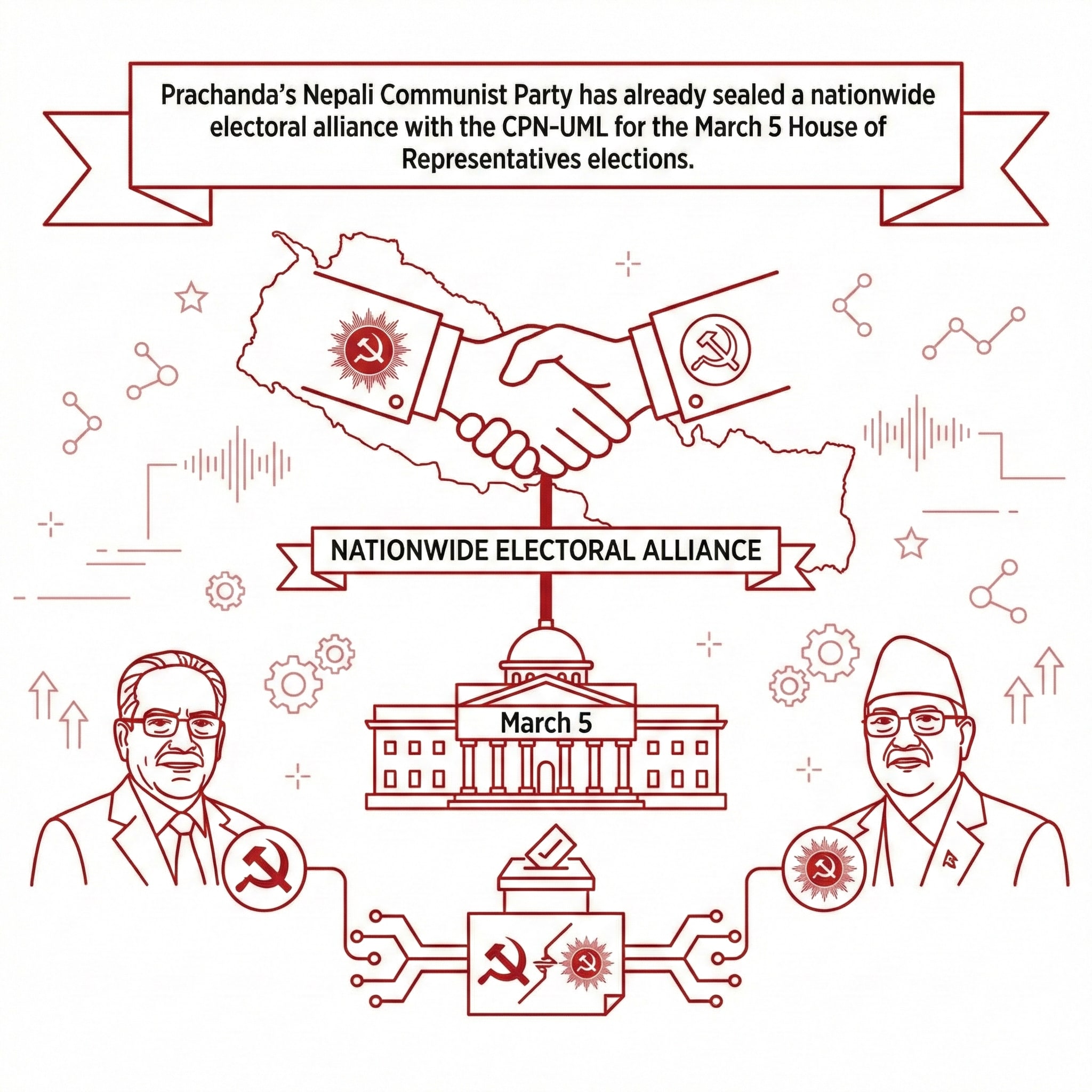
CPN-UML and the Nepali Communist Party have secretly agreed that the NCP candidate will withdraw from Jhapa-5 to ensure KP Sharma Oli defeats Balendra Shah.
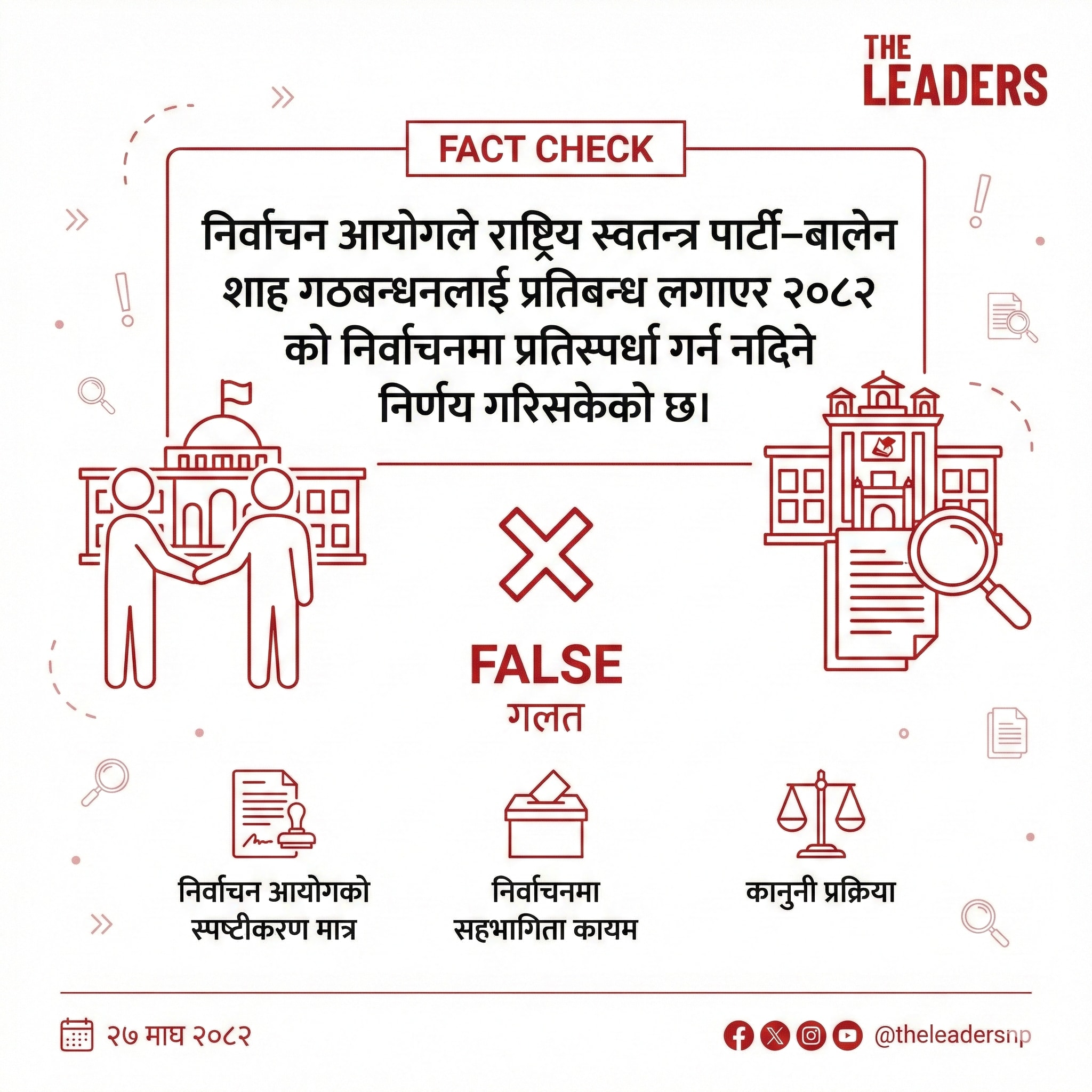
Jhapa-5 has become a high-profile constituency where CPN-UML chair KP Sharma Oli, Rastriya Swatantra Party leader Balendra Shah and the Nepali Communist Party candidate are all in the race. This has fuelled intense speculation about last-minute alliances or withdrawals. Some commentators now claim that a secret deal has already been made for the NCP candidate to step aside in favour of Oli. However, public statements from NCP coordinator Pushpa Kamal Dahal explicitly reject any pre-election alliance and state that his party will contest on its own in all constituencies where it has fielded candidates. CPN-UML leaders confirm that informal discussions on coordination are ongoing but say no final agreement has been reached. As of now, there is no official notification from the Election Commission about withdrawal or alliance registration for Jhapa-5. Because no documentary or on-the-record evidence has been produced to support the claim, and the parties involved formally deny it, the rumour must be treated as unverified. Voters should rely on the final candidate list and ballot paper issued by the Election Commission to see who is actually contesting.