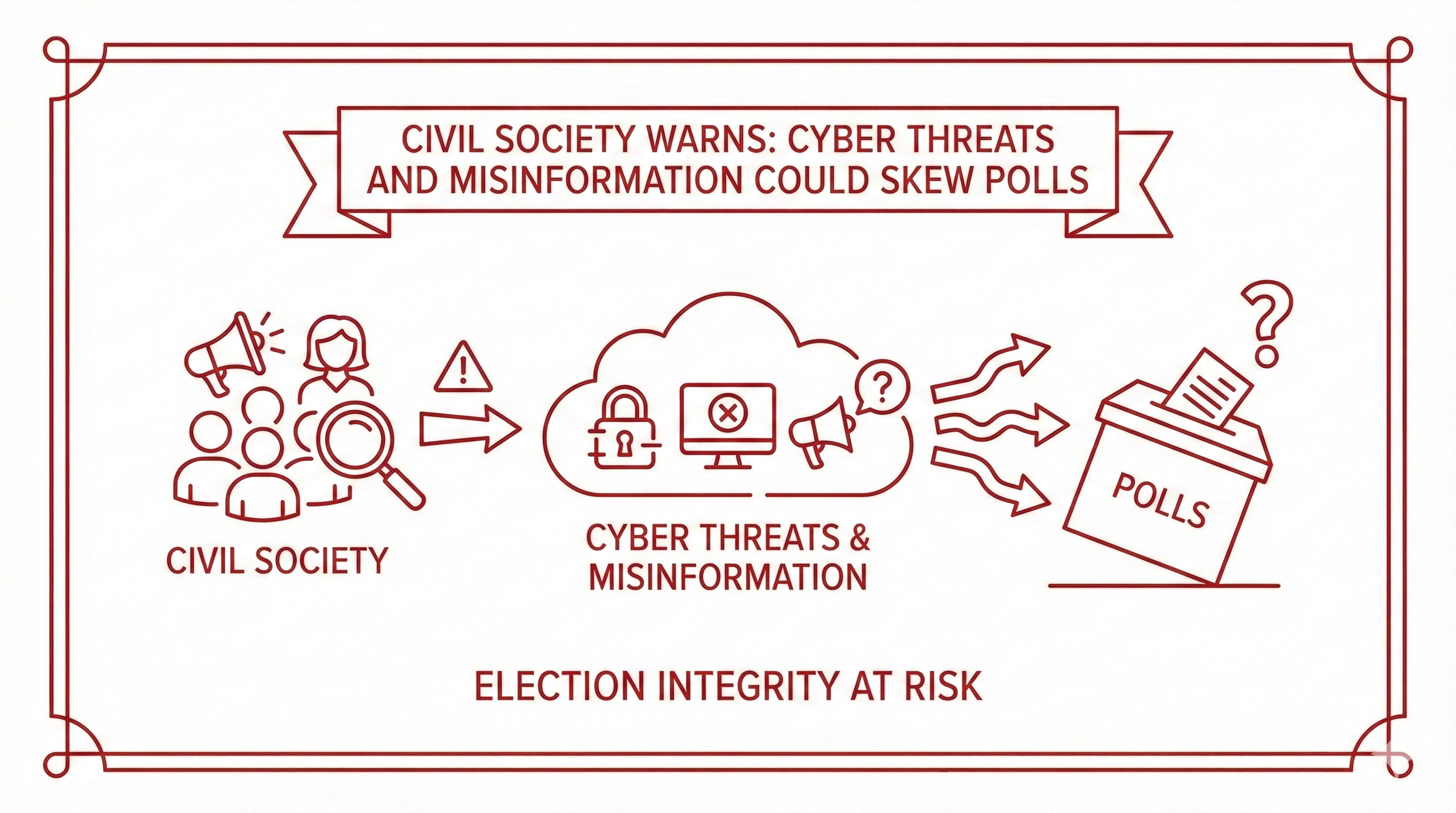
A coalition of 20 civil society organisations has issued a joint statement warning that cyber threats, online harassment and coordinated misinformation campaigns could seriously damage the integrity of Nepal's March 5 House of Representatives election.
According to reporting in the Kathmandu Post and digital rights outlets, the groups—including Digital Rights Nepal, Freedom Forum, Open Internet Nepal, Media Action Nepal and Accountability Lab—say that social media platforms are being used to spread false or manipulated content about candidates, parties and the Election Commission itself. They fear Nepal could become a "testing ground" for sophisticated information manipulation.
The statement urges the Election Commission, media and civil society to collaborate on shared tools, such as a "misinformation dashboard" where journalists and editors can quickly verify and flag viral claims. It also calls on influencers and content creators to take greater responsibility for the political narratives they amplify.
This warning coincides with the Commission's own efforts to counter false narratives, including a recent clarification debunking claims about blacklisting candidates over past expense reports. It also overlaps with the EC's Election Information Dissemination and Coordination Center (EIDC), which is tasked with addressing deepfakes, fake accounts and propaganda in coordination with major platforms.
For voters, the message is blunt: fact‑checking cannot be left to institutions alone. As election day approaches, each share and like contributes either to a more informed public sphere or to a fog of doubt that makes accountability harder.