
Bishweshwar
Bishweshwar Prasad Koirala
Led the struggle against Rana oligarchy and royal autocracy, and articulated a vision of democratic socialism that still shapes Nepal’s political imagination.

Loading The Leaders
Nepal's Political Record • Documented for the Public
The bold decision makersTHE LEADERS— Shaping a nation's destiny —
Discover the visionaries, revolutionaries, and statesmen who shaped the destiny of a nation.
Profiles & Dossiers
The foundational figures of Nepal's political journey. Their decisions shaped the nation for generations.
Led the struggle against Rana oligarchy and royal autocracy, and articulated a vision of democratic socialism that still shapes Nepal’s political imagination.

King of Nepal (Licchavi era) and Mahasamanta
Amshuverma was a transformative ruler of Licchavi‑era Nepal who rose from a powerful noble to de facto and then de jure king around 605–621 CE, presiding over a celebrated golden age marked by administrative innovation, vigorous diplomacy with India and Tibet, economic expansion, monumental architecture such as the Kailashkut Bhawan, and influential legal and cultural reforms whose memory has shaped Nepali political imagination for centuries. Though sources disagree on his precise lineage and on whether the famed Buddhist queen Bhrikuti was his daughter or that of his successor Udayadeva, historians broadly agree that Amshuverma’s combination of military strength, careful foreign policy, and sophisticated governance consolidated the Licchavi state and projected the Kathmandu Valley as a crossroads of Himalayan trade and culture.
King of Nepal (Licchavi period)
Narendradeva was a 7th‑century Licchavi king of Nepal whose reign from 643 to 679 A.D. marked the restoration of royal authority in the Kathmandu Valley after years of internal factionalism and Abhira‑Gupta dominance. The son of the exiled king Uday Deva, he returned from Tibet with military support, overthrew the Gupta usurpers, re‑established the prestige of the Licchavi court, and turned Nepal into a key trans‑Himalayan gateway linking northern India, Tibet, and Tang China through diplomacy, trade, and joint military campaigns such as the famous expedition with Wang Xuance against the usurper Arunasva in Magadha. His reign is remembered both for relatively stable governance and for a rich layer of legends that cast him as a culture‑hero who brought rain‑making deities, supported Buddhist and Hindu institutions, and presided over a prosperous, cosmopolitan Nepal Mandala.
Licchavi king of Nepal, transitional monarch before the rise of Amsuvarma
Shivadeva I (also spelled Sivadeva) was a Licchavi king of early medieval Nepal who ruled the Kathmandu Valley roughly between 590 and 604/605 CE, at a moment when the classical Licchavi monarchy was beginning to share power with ambitious feudal lords. Son of King Manadeva II, he inherited a kingdom already shaped by inscription-backed statecraft, temple endowments, and a sophisticated court culture, but his reign is remembered above all for the meteoric rise of his minister and son-in-law Amsuvarma, who gradually reduced the king to a figurehead and then succeeded him as de facto ruler. Shivadeva I thus stands in Nepalese history as a transitional monarch: personally less visible in the sources than his predecessors and successors, yet crucial as the pivot between the high Licchavi order and the emergence of a new power configuration that foreshadowed the later Thakuri era.
King of Nepal (Thakuri dynasty, early medieval period)
Bhaskaradeva (Nepali: भास्करदेव) was an early–medieval Thakuri king of Nepal whose brief but pivotal reign, roughly from 1039 to 1047 A.D., marked a dynastic and ideological hinge between the older Kathmandu‑based Thakuri branch and the so‑called Nuwakot Thakuris that followed. Documentary mentions of him are sparse, but surviving chronicles and later summaries agree that he ruled the kingdom of Nepal centred on the Kathmandu Valley, first as co‑ruler with a junior king Jayadeva and then as sole monarch, before being succeeded by Baladeva (often rendered Bala Deva in later lists). Tradition further credits him with founding or patronising important Buddhist monastic complexes such as Navabahal and Hemavarna Vihara, tying his name to the evolving religious landscape of the valley even as modern historians continue to debate his exact ancestry and the extent of any dynastic rupture he may have represented. Because the sources are few, contradictory and often composed centuries later, Bhaskaradeva stands in Nepalese historiography as both a concrete sovereign with a roughly datable reign and as a symbol of the uncertainties of the 11th century—a period when the old Licchavi world had faded, the Thakuri houses were competing for legitimacy, and the political, ritual and urban fabric of the Kathmandu Valley was being quietly re‑stitched in ways that would shape the medieval and Malla ages to come.
King of Nepal (Licchavi period)
Jayadeva II was an early eighth‑century Licchavi king of Nepal whose reign, stretching roughly from 713 to 733 CE, marked one of the last clearly documented phases of the classical Licchavi era in the Kathmandu Valley. As the son and successor of Shivadeva II, he inherited a mature hill‑kingdom centered on the Kathmandu Valley, whose agriculture, trade networks, and dense settlements had been built up by generations of Licchavi rulers linking the Himalayan crossroads to the Ganges plain and, increasingly, to Tibet. Inscriptions from his reign, including the celebrated Pashupatinath stele, present him as a pious Hindu monarch embedded in the long Licchavi genealogical tradition, yet they also stand at the edge of a looming historiographical darkness, after which royal inscriptions nearly vanish and the line between the late Licchavis and subsequent dynasties becomes fragmentary and debated. Through dynastic marriage into the royal house of Gauda, diplomatic management of relations with powers in northern India and Tibet, and continued patronage of Shaiva, Vaishnava, and Buddhist institutions, Jayadeva II helped sustain a delicate political and religious balance in a period of shifting regional alignments. For later historians, his name encapsulates a double legacy: on the one hand, a guardian of Licchavi statecraft and religious pluralism at their height, and on the other, a king whose last dated inscription became a chronological anchor for reconstructing Nepal’s early history in the face of scarce evidence for the decades that followed.
King of Nepal Mandala (Kathmandu Valley), first Malla ruler
Ari Malla, often identified with Arimalla or Aridev Malla in later chronicles, is widely regarded as the first king to bear the title "Malla" in the Kathmandu Valley, marking the formal beginning of the Malla dynasty that would shape Nepal Mandala’s politics, economy, and culture for more than six centuries. Emerging around 1200 A.D., in a period of transition from the Licchavi and post-Licchavi order to a new urban, temple-centered polity, Ari Malla consolidated authority around Bhaktapur (Bhadgaon) and the wider valley, gradually elevating himself from a regional lord referenced simply as raja or nrpa in early inscriptions to the full royal titulature of rajadhiraja parameshvara paramabhattaraka. Although many details of his ancestry, exact rise to power, and personal life remain debated, his reign is seen as the hinge between an older, loosely structured political landscape and the more tightly organized, Hindu courtly monarchy that would culminate in the great Malla rulers of the fourteenth and fifteenth centuries, leaving a lasting imprint on Newar society, urban morphology, and religious patronage in Kathmandu, Patan, and Bhaktapur.
Paramount Ruler of the Valley
Jayasthiti Malla (Nepali: जयस्थिति मल्ल), the eleventh Malla king of Nepal, ruled the Kathmandu Valley from 1382 to 1395, renowned for unifying the valley under his authority and implementing sweeping legal and social reforms, including the codification of laws and the restructuring of the caste system into 64 occupational groups, profoundly shaping Newar society and Nepalese jurisprudence.
King of Kathmandu Valley
Jayayakshya Malla, commonly known as Yaksha Malla, was the son of Jayajyotir Malla and the last ruler of the united Kathmandu Valley during the Malla dynasty, reigning from approximately 1428 to 1482. Renowned for his military conquests that expanded Nepal's boundaries to Sikkim in the east, Gorkha in the west, Kerung in the north, and Bihar in the south, he fortified cities, constructed iconic structures like the Palace of Fifty-five Windows, Siddha Pokhari, and Yaksheswar Temple, and presided over a golden era of cultural and infrastructural development before the valley's division among his sons.
King of Bhaktapur
Trailokya Malla (Nepali: त्रैलोक्य मल्ल), a prominent king of the Malla dynasty, ruled Bhaktapur in the Kathmandu Valley from 1560 to 1613 A.D., during a period of tripartite division among Bhaktapur, Kathmandu, and Patan. His long reign of over five decades marked a time of relative stability, cultural patronage, and familial governance shared with his mother Ganga Rani and brother Tribhuvana Malla, amidst the competitive dynamics of Newar kingdoms.
Founder King of Kantipur
Ratna Malla (r. 1484–1520) was a pivotal Malla king, renowned as the first independent ruler of Kantipur (Kathmandu), establishing it as a sovereign kingdom following the division of his father Yaksha Malla's realm. His 38-year reign marked the onset of the Three Kingdoms period in the Kathmandu Valley, characterized by ambitious governance, suppression of rebellions, economic innovations like copper coinage, and cultural shifts including invitations to Muslim traders and South Indian priests, profoundly shaping Nepal's medieval political landscape.
King of Kantipur
Mahendra Malla (r. 1560–1574) was the fourth king of Kantipur in the Malla dynasty, renowned for economic reforms, land distributions, construction of the iconic Taleju Temple, and introduction of the first silver mohar coins known as mahendramallis, which bolstered trade and left a lasting numismatic legacy in Nepal's Kathmandu Valley history.
King of Patan (Lalitpur)
Siddhi Narasimha Malla was a prominent 17th-century king of the Malla dynasty who ruled Patan (Lalitpur) from 1619 to 1661, renowned for his religious devotion, diplomatic acumen, architectural patronage including the iconic Krishna Mandir, and efforts to maintain Patan's independence amid rivalries with neighboring kingdoms like Kantipur.
King of Kantipur (1641-1674)
Pratap Malla (1624–1674 A.D.) was the eighth King of Kantipur, reigning from 1641 to 1674, renowned for his ambitious efforts to unify the Kathmandu Valley, economic prosperity through Tibet trade monopoly, extensive patronage of arts and architecture, and cultural flourishing that marked the zenith of the Malla dynasty in Nepal.
King of Bhaktapur
Bhupatindra Malla (1674–1722) was the most renowned king of the Malla Dynasty in Bhaktapur, Nepal, reigning from 1696 to 1722. Celebrated for his architectural patronage, including the iconic Nyatapola Temple and the 55-Window Palace, he elevated Bhaktapur's status through military prowess, diplomatic maneuvers, and cultural flourishing amid the rival kingdoms of the Kathmandu Valley. His era marked a pinnacle of Newar art, religion, and political independence before the eventual unification under the Shahs.
King of Bhaktapur (Last Malla)
Ranajit Malla (1702-1770) was the last sovereign king of the Malla dynasty in Bhaktapur, reigning from 1722 to 1769. Renowned for his profound contributions to Newari literature, architecture, and pious governance amid political turmoil, he navigated succession crises, inter-kingdom rivalries, and the Gorkhali unification, ultimately exiling to Varanasi after defeat by Prithvi Narayan Shah. His legacy endures in Bhaktapur's Golden Gate, devotional songs, and as a symbol of cultural resilience during Nepal's transition from fragmented Malla kingdoms to Shah unification.
King of Gorkha
Nara Bhupal Shah (1697–1743) was the ninth king of the Gorkha Kingdom, reigning from 1716 to 1743. Grandson of Prithvipati Shah and son of Birbhadra Shah, he continued the expansionist policies of his predecessors, attempting to capture Nuwakot as a gateway to the Kathmandu Valley, though unsuccessfully during his lifetime. Father of Prithvi Narayan Shah, the unifier of Nepal, his reign laid crucial groundwork for Gorkha's rise as a dominant power in the Chaubisi Rajya.
Regent and Prince
Prince Bahadur Shah of Nepal (1757–1797) was the youngest son of King Prithvi Narayan Shah and a pivotal regent (1785–1794) who aggressively expanded the nascent Kingdom of Nepal through military conquests across the Himalayas, annexing numerous principalities while initiating a legacy of court intrigues that foreshadowed future instability.
Sardar (Supreme Commander)
Bhakti Thapa Chhetri (1741–1815) was a renowned Nepali military commander and administrator who played a pivotal role in Nepal's unification campaigns, quelled revolts in the western territories, and heroically defended Nepal during the Anglo-Nepalese War, sacrificing his life at the Battle of Deothal at age 74. Declared a national hero in 2021, he exemplifies Gorkhali valor and strategic brilliance in expanding and safeguarding the nascent Kingdom of Nepal.
National Hero; Western Front Supreme Commander of the Kingdom of Nepal
Bada Kaji Amar Singh Thapa (c. 1751–1816), revered as the "Living Lion of Nepal", was one of the most formidable military commanders and frontier governors of the expanding Kingdom of Nepal in the late eighteenth and early nineteenth centuries, remembered especially for his role as supreme commander of the western front during the Anglo-Nepalese War and for pushing Nepal’s borders westward to the Sutlej River. Born into the powerful Bagale Thapa clan and son of the celebrated commander Bagh Bhim Singh Thapa, he rose from a provincial noble of Gorkha into the king’s leading warlord in the western hills, integrating dozens of principalities in Kumaon, Garhwal and neighbouring regions into the Gorkhali state while also administering newly conquered territories as a military governor. His resolute, often romanticised defence against the British East India Company from his strongholds at Arki, Malaun and the surrounding forts, his appeals to Asian powers for solidarity, and his eventual retreat to the sacred site of Gosainkunda, where he died in 1816, have made him a symbol of patriotism, sacrifice and stoic resistance in Nepali historical memory. Honoured as a National Hero of Nepal in modern times, Amar Singh Thapa’s life connects the unification wars, frontier administration, regional diplomacy and the traumatic encounter with British imperialism that reshaped Nepal’s boundaries and identity.
Captain in the Gorkha Kingdom’s army and later General in the Sikh Empire’s army.
Balbhadra Kunwar (1789–1823) was a celebrated Gorkhali military commander whose defence of Nalapani during the Anglo‑Nepalese War turned him into one of Nepal’s most enduring national heroes. Born into the powerful Kunwar–Thapa family network and trained from youth in the martial traditions of the expanding Gorkha state, he rose from a young captain to a frontline commander entrusted with the defence of Dehradun and its hill forts against the British East India Company. His stand at Khalanga/Nalapani in 1814, where a small garrison of roughly 600—including non‑combatants—held off repeated assaults by several thousand British troops, became emblematic of Nepali resilience, discipline, and refusal to surrender even in hopeless odds. After the war he continued his career as a professional soldier in the Sikh Empire under Maharaja Ranjit Singh, serving as a general and commander of Nepali “Goorkha” regiments until he was killed in battle near Nowshera in 1823, a death that sealed his reputation as a warrior who fought uncompromisingly to the end.
Commander-in-Chief and Prime Minister equivalent
Vamshidhar 'Kalu' Pande was a pivotal Kaji, commander-in-chief, and trusted advisor to King Prithvi Narayan Shah during Nepal's unification campaign. Renowned for his valor, strategic acumen, and diplomatic skills, he played crucial roles in key victories like Nuwakot while cautioning against ill-prepared assaults such as Kirtipur, where he met his heroic end in 1757. His legacy endures as a symbol of Gorkhali loyalty and sacrifice in forging modern Nepal.
De facto Ruler of Nepal
Bhimsen Thapa (1775–1839) was a pivotal Nepalese statesman, serving as Mukhtiyar and de facto ruler from 1806 to 1837, guiding Nepal through expansion, the Anglo-Nepalese War, and internal reforms amid the Shah Dynasty's turbulent era. Renowned for modernization efforts, anti-British diplomacy, and military leadership, his 31-year tenure shaped modern Nepal's sovereignty, though marred by the 1806 Bhandarkhal massacre and familial power consolidation.
King and Mukhtiyar
Rana Bahadur Shah (1775–1806) was the third King of unified Nepal from the Shah dynasty, reigning from 1777 to 1799 under regencies before abdicating. Known for territorial expansions into Garhwal and Kumaon, controversial social reforms challenging caste norms, dramatic abdication, exile in Varanasi, and tumultuous return marked by court intrigues and anti-British diplomacy. His reign was pivotal in Nepal's early modern history, blending conquests, personal eccentricities, and power struggles that paved the way for future leaders like Bhimsen Thapa.
King of Nepal
Girvan Yuddha Bikram Shah was the fourth King of Nepal from the Shah dynasty, reigning from 1799 to 1816 during a pivotal era marked by internal court intrigues, regency politics, and the Anglo-Nepalese War, which resulted in significant territorial losses through the Treaty of Sugauli. Ascending the throne as an infant, his rule was dominated by regents Queen Tripurasundari and Prime Minister Bhimsen Thapa, shaping Nepal's early 19th-century trajectory amid expansionist pressures and colonial threats.
8th Prime Minister of Nepal and first Shree Teen Maharaja of the Rana dynasty
Jung Bahadur Rana (born Bir Narsingh Kunwar on 18 June 1817, died 25 February 1877) was the prime minister and virtual ruler of Nepal from 1846 to 1877 and the founder of the hereditary Rana regime that dominated the kingdom for more than a century. Rising from a turbulent aristocratic background marked by the fall of his powerful Thapa relatives, he seized power through the bloody Kot Massacre of 1846, neutralised rival noble clans, and reduced the Shah monarchy to a ceremonial institution while concentrating authority within his own family. His rule combined ruthless autocracy with far‑reaching state reforms: he reorganised the army, codified law through the Muluki Ain of 1854, opened the first English‑style school in Kathmandu, and crafted a pragmatic foreign policy that aligned closely with British India while preserving Nepal’s formal independence. Celebrated by some as a hard‑headed moderniser and condemned by others as the architect of a "dark century" of oligarchic oppression, Jung Bahadur’s legacy continues to shape debates about power, law, class, and sovereignty in modern Nepali history.
2nd Rana Prime Minister
Ranodip Singh Kunwar (1825–1885) was the second Prime Minister of Nepal from the Rana dynasty, succeeding his brother Jung Bahadur Rana in 1877. Known for his piety and diplomatic engagements with British India and Qing China, he ruled until his assassination in a 1885 coup by his nephews led by Bir Shumsher, marking a pivotal shift in Rana power dynamics.
Prime Minister of Nepal
Bir Shumsher Jung Bahadur Rana (1852–1901) was the 11th Prime Minister of Nepal, ruling from 1885 to 1901 under the Rana oligarchy. Renowned for modernizing reforms including infrastructure, education, healthcare, and administration, he solidified the Shumsher line's dominance while maintaining close ties with British India.
Fourth Rana Prime Minister of Nepal; reformist ruler and Maharaja of Lamjung and Kaski remembered for pioneering education and press reforms during a brief 114‑day premiership.
Dev Shumsher Jung Bahadur Rana (1862–1914) was the fourth hereditary Rana prime minister of Nepal, a reformist statesman whose brief 114‑day premiership in 1901 left a disproportionate mark on the political, educational, and social evolution of the kingdom. Born into the powerful clan that had seized control of the state after the Kot Massacre, he rose through the intricate hierarchy of court offices to become Sri 3 Maharaja and de facto ruler under King Prithvi Bir Bikram Shah. Though his time in office was short, he launched bold initiatives: proclaiming universal primary education, opening Durbar High School and new Bhasha Pathshala vernacular schools to non‑Rana subjects, reviving an imported printing press to publish Gorkhapatra as Nepal’s first government newspaper, and signalling tentative moves against slavery and entrenched corruption. His progressive vision, willingness to use Nepali language in state schooling, and interest in consultative politics alarmed more conservative relatives within the Rana oligarchy, who engineered a bloodless coup that toppled him in June 1901 and sent him into internal exile and later life in Darjeeling under British protection. Remembered by many historians as the most liberal of the Rana prime ministers, his legacy survives in the institutionalisation of the press, the early architecture of public education, and the idea—still radical in his own milieu—that power could be exercised in the name of a broader Nepali public rather than only for an aristocratic caste oligarchy.
Fifth hereditary Rana Prime Minister of Nepal (1901–1929)
Chandra Shumsher Jung Bahadur Rana was the fifth hereditary Prime Minister of Nepal from the Rana dynasty, ruling from 1901 to 1929. Widely regarded as an authoritarian and conservative ruler, he nonetheless presided over a transformative era of infrastructural and legal change, including the abolition of slavery, the prohibition of Sati, the establishment of Tri‑Chandra College, the expansion of irrigation and early transport networks, and the landmark 1923 Anglo‑Nepalese Treaty that formally acknowledged Nepal’s independence. His career embodies the paradox of a feudal autocrat who entrenched Rana oligarchy while simultaneously laying crucial institutional foundations for a modern Nepali state.
Rana Prime Minister
Bhim Shumsher Jung Bahadur Rana (1865–1932) was a prominent Rana ruler who served as the 14th Prime Minister of Nepal from 1929 to 1932, succeeding his elder brother Chandra Shumsher. Born into the powerful Rana family as the sixth son of Dhir Shumsher, he rose through the military ranks over decades, becoming Commander-in-Chief before ascending to supreme power. His brief but impactful reign featured progressive reforms including the abolition of capital punishment, introduction of weekly holidays, tenant protections, and infrastructure developments like hospitals, roads, bridges, and waterworks, influenced significantly by his wife Sita Bada Maharani Deela Kumari Devi. Bhim Shumsher navigated complex foreign relations, balancing ties with British India and Kuomintang China amid a near-war with Tibet in 1930. Father to future Prime Minister Padma Shumsher, his legacy marks a liberal interlude in the autocratic Rana era.
Seventh Rana Prime Minister (Shree Teen Maharaja) of Nepal, de facto head of state (1932–1945).
Juddha Shumsher Jung Bahadur Rana (1875–1952) was the seventh hereditary Rana prime minister of Nepal, ruling from 1932 to 1945 and functioning as the de facto monarch while the Shah kings remained reduced to ceremonial status. Born into the powerful Dhir Shumsher branch of the Rana clan, he rose from a junior, partially marginalized line to become the paramount ruler in the later phase of the Rana oligarchy. His tenure was defined by the catastrophic 1934 Nepal–Bihar earthquake and his highly visible programme of relief, urban reconstruction, and the rebuilding of monuments like the Dharahara tower, which allowed him to craft an image of a stern but capable guardian of the realm. At the same time, he presided over one of the harshest periods of repression against emerging anti‑Rana politicians, ordering executions and long imprisonments even as nationalist currents from British India and global anti‑colonial movements began to seep into Nepal. In November 1945 he unexpectedly abdicated in favour of his nephew Padma Shumsher, an act that contemporaries read as a strategic retreat in anticipation of the end of British rule in India and the mounting vulnerability of the Rana system. He died in 1952 in Dehradun, India, leaving behind a legacy that oscillates between praise for his disaster management and infrastructure initiatives and condemnation of his autocratic, repressive governance.
15th Rana Prime Minister
Padma Shumsher Jung Bahadur Rana (1882–1961) was the 15th hereditary Prime Minister of Nepal from 1945 to 1948, renowned as a reformist Rana ruler who proclaimed himself 'a servant of the nation,' initiated infrastructure projects, education reforms including the first women's college, municipal elections, and promulgated Nepal's first constitution, though short-lived amid family intrigues and exile.
Field-Marshal, Last Rana PM
Field-Marshal Shree Maharaja Sir Mohan Shumsher Jung Bahadur Rana (1885–1967) was the final Prime Minister and Foreign Minister of Nepal from the Rana dynasty, ruling from 1948 to 1951 amid rising democratic pressures and monarchy resurgence. Son of Chandra Shumsher, he navigated the end of over a century of Rana autocracy through military command, diplomatic maneuvers, and the ill-fated 1950 palace coup attempting to install a child king, only to yield via the Delhi Compromise, marking Nepal's transition to constitutional monarchy.
Senior Rana general, Commanding General of the Nepalese Army, and Minister of Defence in the 1951 Congress–Rana coalition cabinet.
Baber Shumsher Jung Bahadur Rana was a senior Rana general and statesman who served as Commanding General of the Nepalese Army and later as Minister of Defence in the transitional 1951 Congress‑Rana cabinet. A son of Chandra Shumsher and brother of Mohan Shumsher, he embodied the military‑political elite of the late Rana period, combining service in two world wars, command of the national army, and participation in the final phase of Rana rule during the 1950 revolution. His career mirrored the broader arc of Nepal’s engagement with British imperial power and the painful, incomplete transition from autocratic Rana dominance to a fragile early‑democratic experiment.
8th Shah King, Father of Democracy
Tribhuvan Bir Bikram Shah Dev (1906–1955) was the King of Nepal from 1911 to 1955, a pivotal figure who ascended the throne as a child under Rana regency and later orchestrated the end of over a century of autocratic Rana rule through his dramatic flight to India in 1950, paving the way for constitutional monarchy and democracy in Nepal. Revered as the Father of the Nation and Father of Democracy, his reign bridged feudal isolation to modern nationhood amid anti-Rana revolts and international diplomacy.
King of Nepal (1955–1972), architect of the Panchayat system and central figure of mid‑twentieth‑century Nepali state‑building.
Mahendra Bir Bikram Shah Dev (1920–1972) was the ninth King of Nepal, ruling from 1955 until his death, and the architect of the partyless Panchayat system that reshaped Nepal’s political, social, and cultural trajectory in the mid‑twentieth century. Ascending the throne after the anti‑Rana revolution and a brief experiment with parliamentary democracy, he dismantled multi‑party rule in a dramatic coup in 1960, centralized authority in the monarchy, and sought to craft a distinct, sovereign, and unitary Nepali nation‑state through an assertive program of nationalism, administrative reorganization, economic planning, and cultural homogenization. His reign combined far‑reaching state‑building initiatives—creation of the Panchayat system, administrative zoning, the strengthening of a national army, expansion of infrastructure, introduction of Tribhuvan University, and institutionalization of Nepali language, currency, and symbols—with tight political control, suppression of opposition, and curbs on civil liberties, making him one of the most influential and controversial figures in modern Nepali history. Dying suddenly in 1972, he left to his successor both an expanded, more coherent state apparatus and a deeply contested political legacy that continues to shape debates about monarchy, democracy, nationalism, and development in Nepal.
10th King of the Shah dynasty of Nepal; absolute monarch (1972–1990) and later constitutional monarch (1990–2001) during Nepal’s transition from partyless rule to multiparty democracy.
King Birendra Bir Bikram Shah Dev (1945–2001) was the 10th Shah monarch of Nepal and one of South Asia’s most emblematic late‑20th‑century kings, presiding over the country’s fraught transition from absolute monarchy to constitutional multiparty democracy while navigating Cold War geopolitics, regional rivalries, and an emerging Maoist insurgency. Educated at elite institutions abroad yet deeply embedded in the traditional Hindu monarchical culture at home, he inherited his father King Mahendra’s partyless Panchayat system in 1972 and for nearly two decades ruled as an absolute monarch before accepting sweeping democratic reforms after the 1990 People’s Movement. His reign saw expanded tourism, cautious economic development, symbolic campaigns for Nepal as a peace zone, and attempts at balanced relations with India, China, and the wider international community, even as structural poverty, exclusion, and centralization fueled eventual rebellion. Revered by many as a gentle, accessible, and peace‑inclined king, he was killed along with much of his close family in the still‑controversial royal palace massacre of June 1, 2001, an event that shattered public faith in the monarchy and set the stage for the eventual abolition of the Shah dynasty. His legacy remains central to debates over monarchy, democracy, and national identity in modern Nepal.
Former King of Nepal (last reigning monarch), influential symbolic figure in contemporary Nepali political and cultural discourse.
Gyanendra Bir Bikram Shah Dev (born 7 July 1947) is the last king of Nepal, a monarch whose life traces the dramatic arc of the Himalayan kingdom’s transition from hereditary rule to federal democratic republic, and whose contested legacy continues to animate royalist and republican imaginations alike. As a toddler he was briefly installed as king during the anti‑Rana struggle of 1950–1951, then spent half a century in the shadow of his father King Mahendra and his elder brother King Birendra before abruptly returning to the throne in the wake of the 2001 royal massacre that decimated the reigning royal family. His second reign coincided with the climax of Nepal’s Maoist insurgency, the crisis of the 1990 constitutional order, and his own controversial experiment with direct rule between 2002 and 2006, developments that culminated in the Jana Andolan II people’s movement, the restoration of parliament, the Comprehensive Peace Accord, and the abolition of the 240‑year‑old Shah monarchy on 28 May 2008. Since then, Gyanendra has lived as a private citizen yet remains a potent symbolic figure, periodically resurfacing in public life as royalist networks test the strength of nostalgia for monarchy amid persistent disillusionment with Nepal’s post‑2008 political class.
Pioneer of Nepali Democracy
Matrika Prasad Koirala was a pioneering Nepalese politician, revolutionary leader, and the first commoner Prime Minister of Nepal, serving two terms post-Rana era. As the eldest of the influential Koirala brothers, he played a pivotal role in the 1951 revolution against Rana autocracy, led the Nepali Congress, navigated early democratic transitions amid internal party conflicts and royal influences, and later served as ambassador to the US. His tenure marked Nepal's shift from hereditary rule to constitutional governance, though marred by controversies like the Delhi Agreement and party expulsion.
Founding Leader
Krishna Prasad Bhattarai (1924–2011), affectionately known as Kishunji, was a pioneering Nepalese political leader, journalist, and democrat who played a pivotal role in ending the Rana oligarchy in 1951, restoring multiparty democracy after the 1990 People's Movement, and serving twice as Prime Minister. A founding member and long-time president of the Nepali Congress, he oversaw the promulgation of Nepal's 1990 Constitution and the first free elections in three decades, embodying integrity, non-violence, and Gandhian principles amid turbulent transitions from monarchy to democracy.
Founding General Secretary of the Communist Party of Nepal and leader of the Communist Party of Nepal (Pushpa Lal)
Pushpa Lal Shrestha (1924–1978) was a Nepali revolutionary, Marxist theorist, and the founding general secretary of the Communist Party of Nepal, widely regarded as the father of Nepali communism. Emerging from a politically engaged Newar family in Ramechhap and the younger brother of martyr Gangalal Shrestha, he entered anti‑Rana politics in his youth and soon became a central figure in the democratic struggle. Disillusioned with the limitations of liberal nationalism, he founded the Communist Party of Nepal in 1949 in Calcutta, translated core Marxist–Leninist texts into Nepali, and articulated a class‑based critique of Nepal’s feudal and semi‑colonial order. Over the next three decades he navigated bans, exile, party splits, and ideological polarization, eventually leading the Communist Party of Nepal (Pushpa Lal) and shaping the ideological terrain from which Nepal’s later communist movements—including the mainstream communist parties and the Maoist insurgency—would draw their lineage. His death in 1978 in New Delhi ended a life of continuous struggle, but his writings, organizational legacy, and symbolic status as a principled, self‑sacrificing leader continue to occupy a central place in Nepal’s political memory.
General Secretary and chief ideologue of CPN (UML), principal architect of People’s Multiparty Democracy, and leading communist figure of late 20th-century Nepal.
Madan Kumar Bhandari (1952–1993) was a transformative Nepali communist leader, celebrated as the "People’s Leader" for his rare combination of ideological depth, organizational skill, and personal integrity. Born in Dhungesangu, Taplejung, he rose from a modest hill village to become General Secretary of the Communist Party of Nepal (Unified Marxist–Leninist), where he redefined the communist movement through his doctrine of People’s Multiparty Democracy, an innovative synthesis that accepted competitive multi-party democracy and civil liberties as non-negotiable foundations for a socialist project. During the final decades of the Panchayat regime and the democratic upheaval of 1990, he played a decisive role in organizing underground resistance, articulating a strategic shift away from armed rebellion, and turning a once clandestine cadre-based party into a broad, mass-based democratic force rooted among workers, peasants, women, and youth. His landslide electoral victories in 1991, his powerful oratory that filled public squares, and his insistence on pluralism, human rights, nationalism, and social justice left a deep imprint on Nepal’s path from monarchy toward a federal democratic republic, even though his life was cut short by a still-contested jeep accident at Dasdhunga in 1993. Today, his thought and image continue to shape Nepali communist politics, constitutional debates, and popular memory, making him one of the most influential left leaders in the country’s modern history.
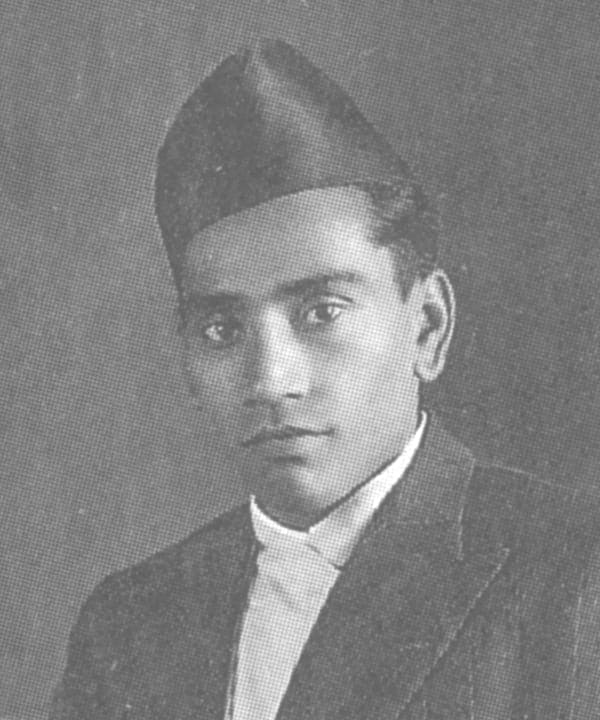
The Supreme Leader
From Rana prisons to leading Jana Andolan, he carried the democratic struggle on his shoulders and refused power when it was within his grasp.
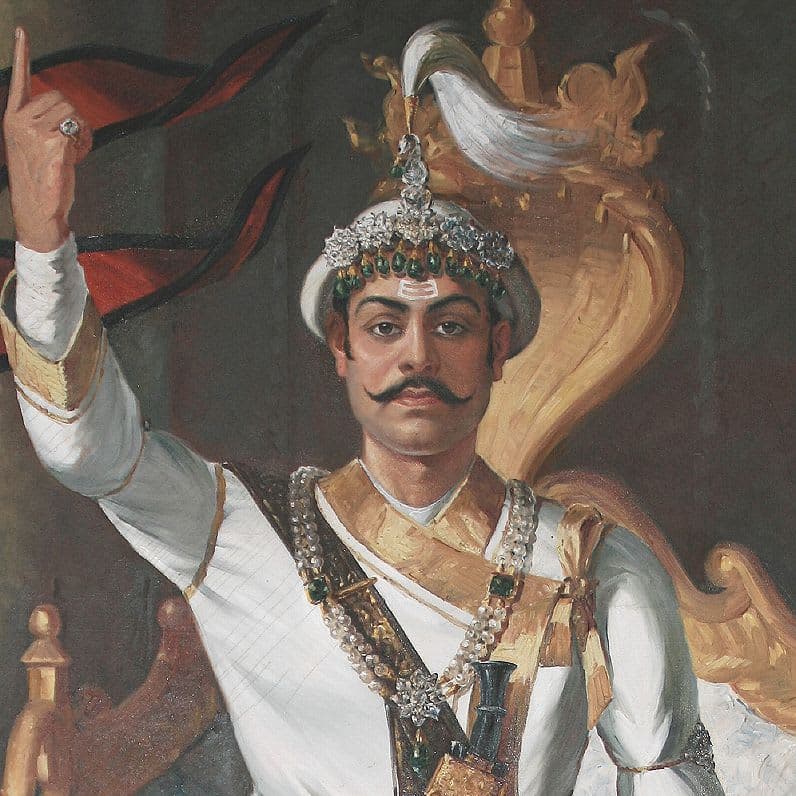
The Unifier
From a small hill kingdom, he forged a sovereign state in the Himalaya and laid the foundations of modern Nepal’s territorial and political identity.
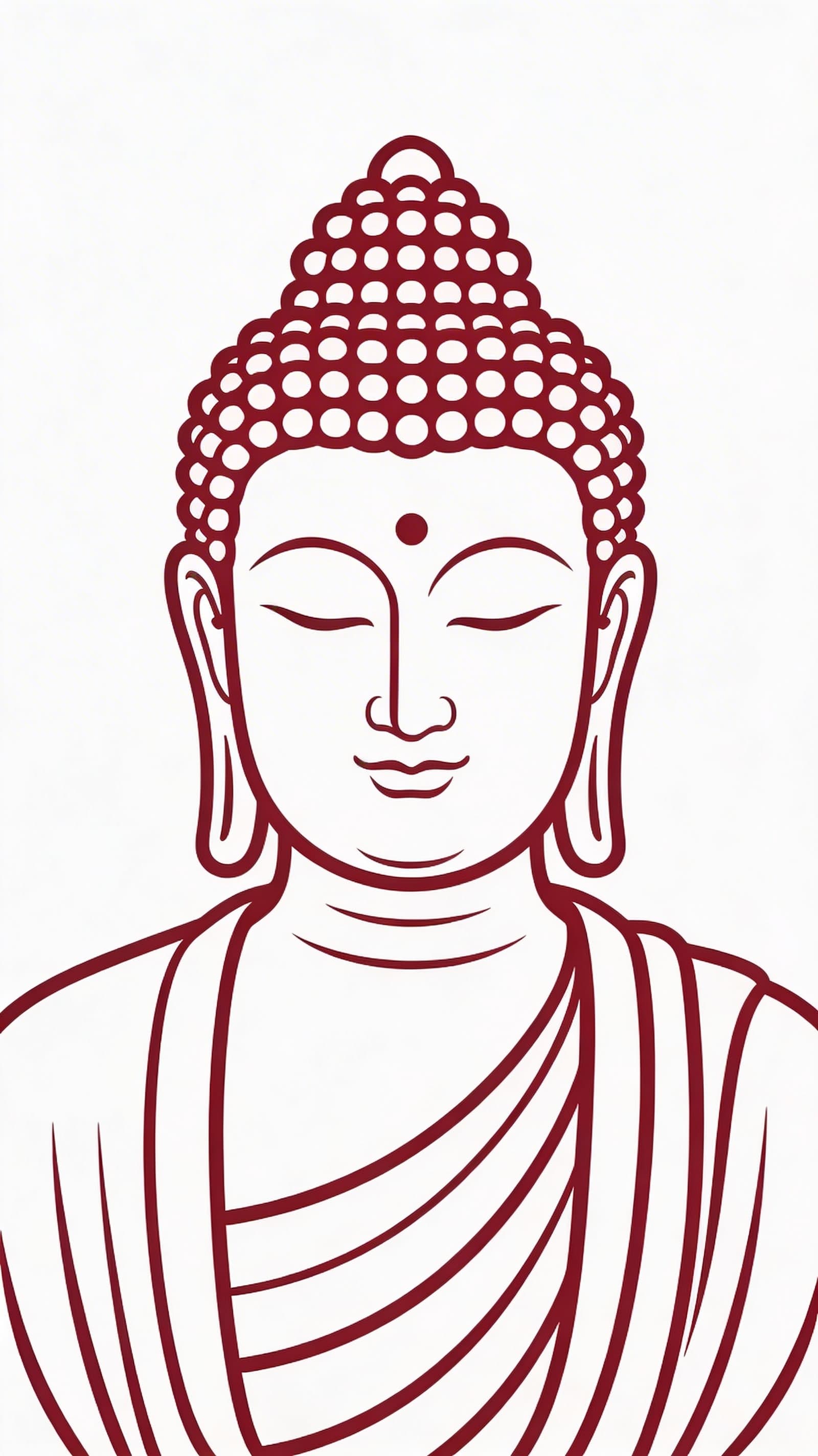
Founder of Buddhism & Spiritual Awakener of the World
The Supreme Buddha who transformed human consciousness itself, born in Lumbini, Nepal, who renounced princely luxury to discover the path to universal liberation. His teachings on suffering, enlightenment, and the Middle Way spawned the world's largest religions and fundamentally altered the spiritual trajectory of billions across Asia and beyond.
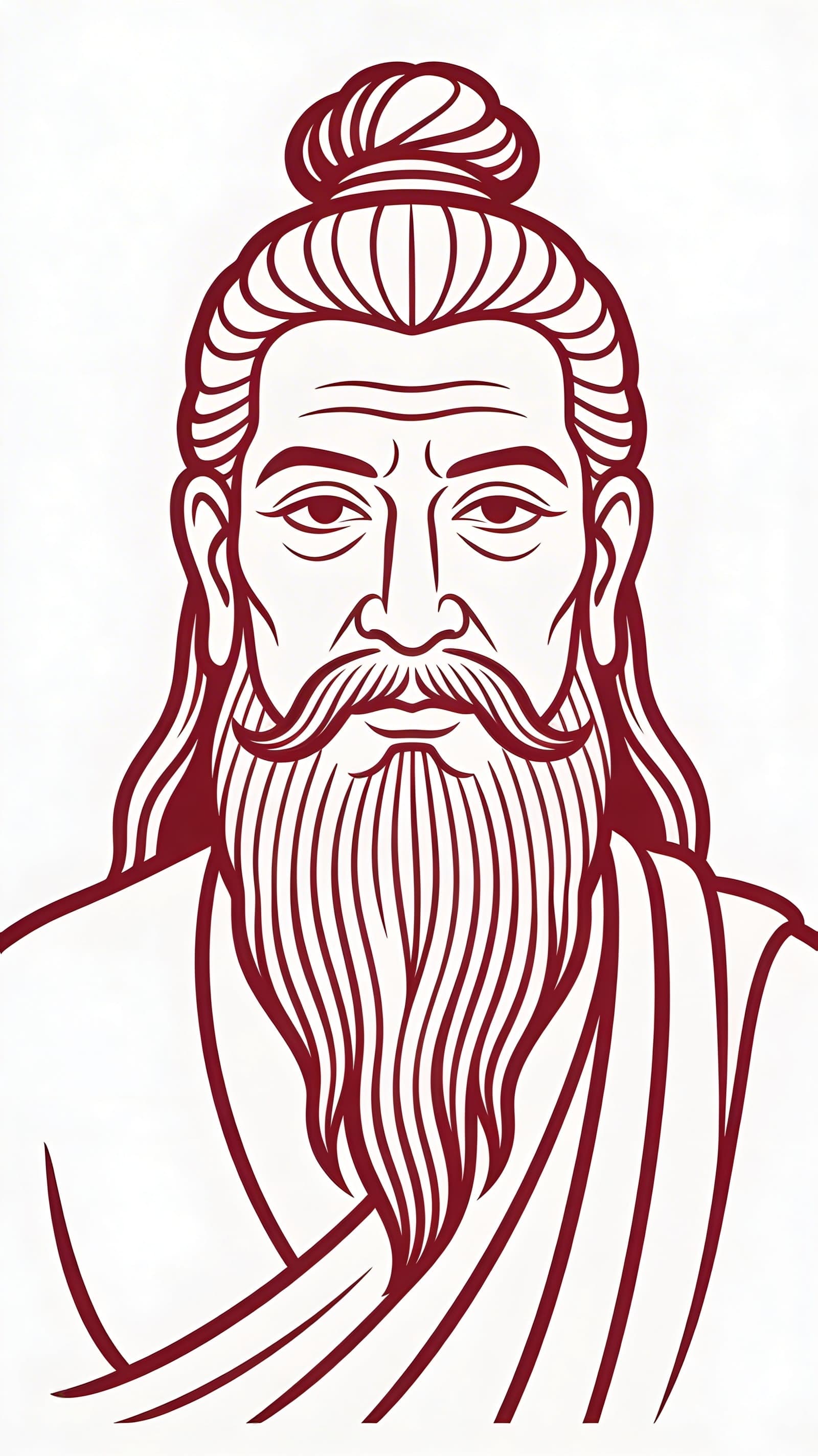
Legendary Sage, Compiler of the Vedas and Author of the Mahabharata
Krishna Dvaipayana, widely revered as Vedavyasa or simply Vyasa, is the legendary sage traditionally credited with dividing the single primordial Veda into the four canonical collections and composing the epic Mahabharata. He is also associated with the authorship or compilation of the Brahma Sutras and the eighteen major Puranas, making him one of the foundational architects of Hindu scriptural tradition. As the son of the sage Parashara and Satyavati and the biological father of Dhritarashtra, Pandu, and Vidura, Vyasa stands both as a spiritual lawgiver and as an ancestor of the very dynasty whose tragic civil war he narrates. While modern historians regard him as a mythic or composite figure whose exact historical dates cannot be established, his literary and theological persona has shaped religious life, philosophy, and political imagination from the Indo-Gangetic plains to the Himalayan kingdoms, including Nepal, for many centuries.
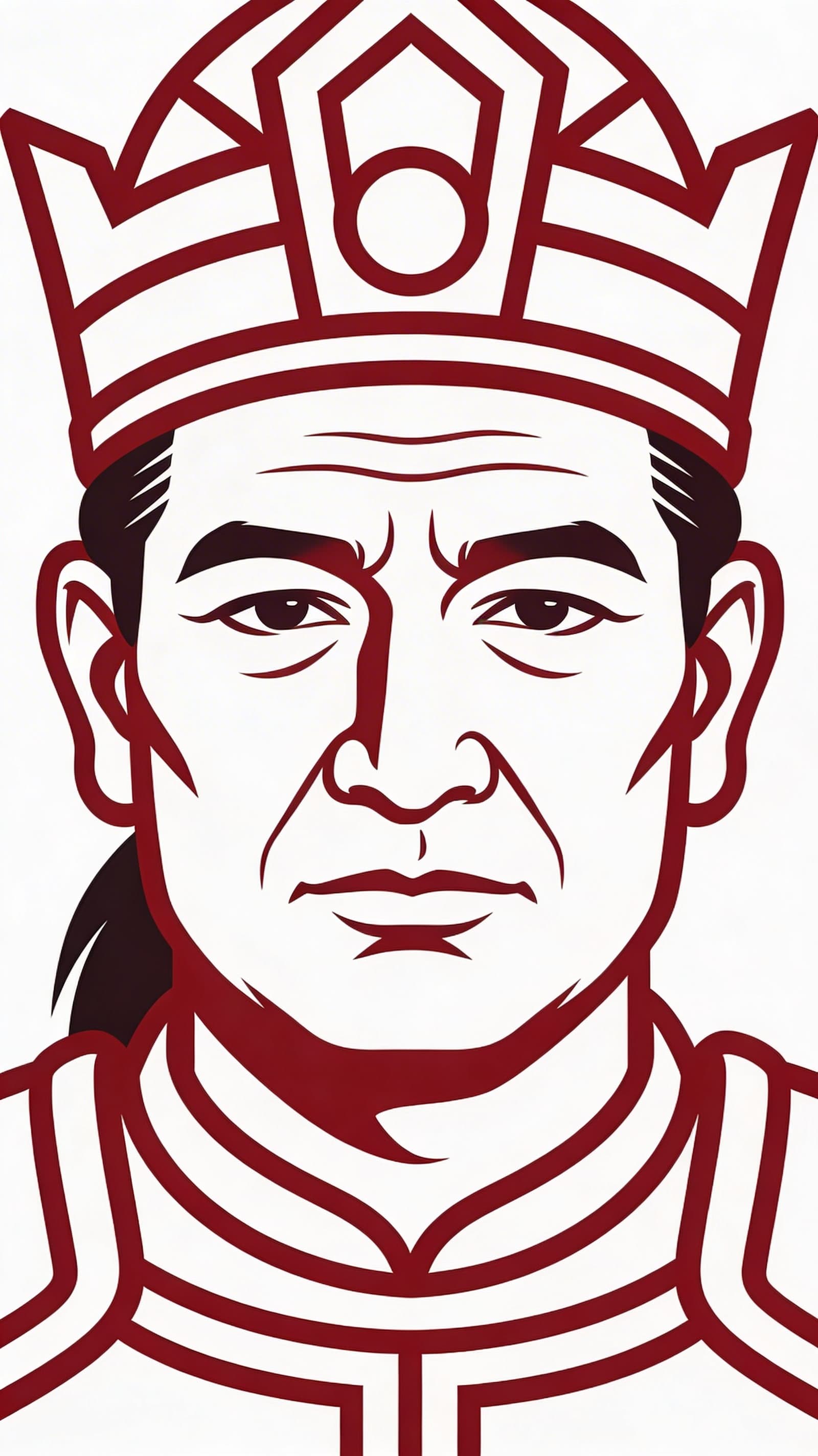
First Kirat King of Nepal and Legendary Mahabharata-Era Warrior
King Yalambar, also known as Yalamber or Yellung Hang, is remembered in Nepali chronicles and Kirat oral tradition as the first historical ruler of the Kirat dynasty in Nepal, who conquered the Kathmandu Valley and established a powerful hill kingdom stretching from the Trishuli River in the west to the Teesta River in the east. Traditional Bansawali genealogies place his rise around the 8th–9th century BCE, crediting him with defeating the last Ahir or Mahispal ruler Bhuban Singh and founding a line of roughly 29 Kirat kings who ruled for about 1,200 years before the advent of the Licchavi dynasty. Later Hindu–Buddhist legend fuses Yalambar with Barbarika of the Mahabharata, claiming that Lord Krishna took his head before the Kurukshetra war and that this severed head is now worshipped in Kathmandu as the sky-god Akash Bhairav during the Indra Jatra festival, making him a rare figure who stands at the crossroads of myth, religion, and early state formation in Nepal.
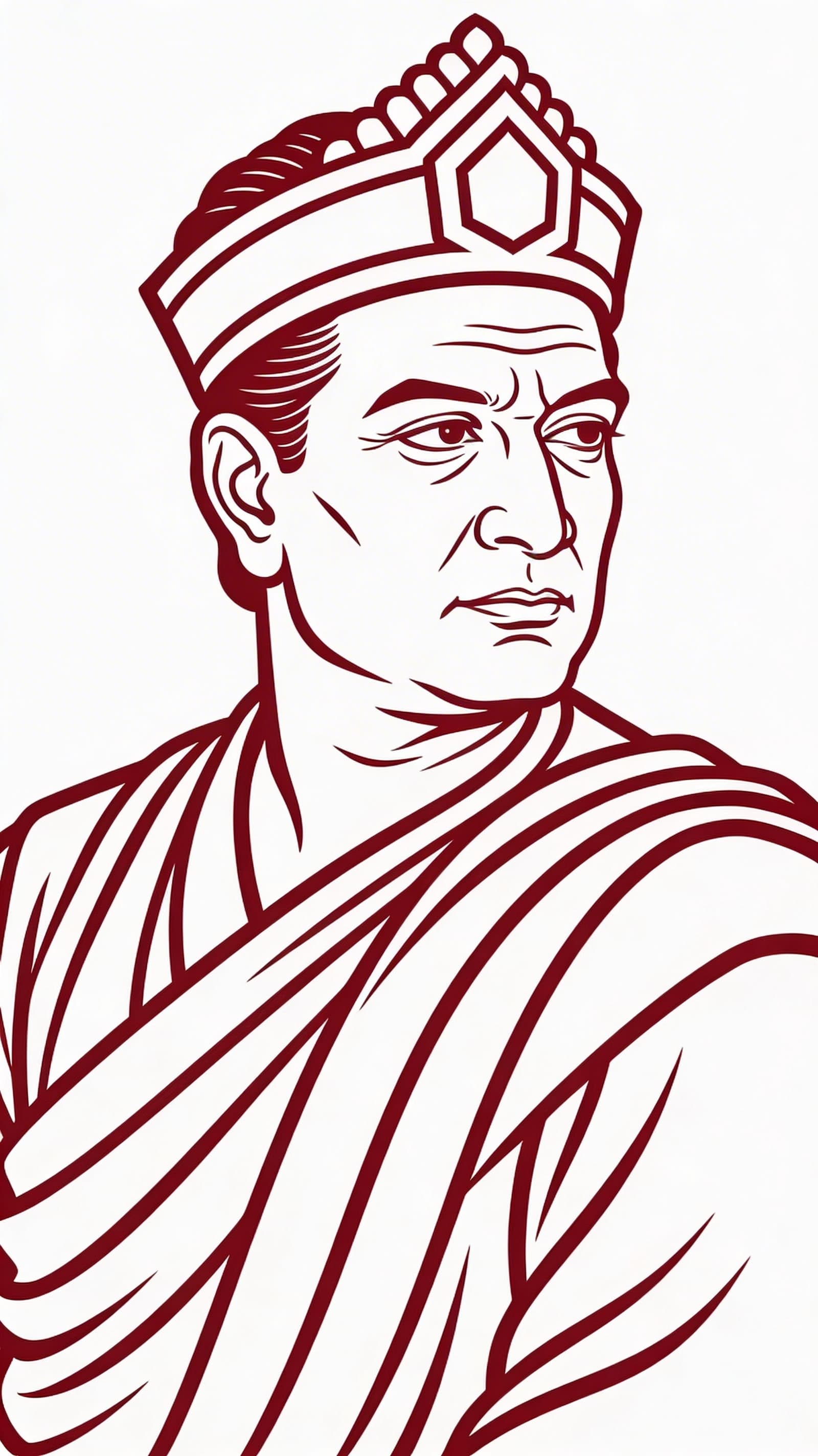
Licchavi king of Nepal and first fully documented historical monarch
Manadeva I (also written Mandev or Mandeva) was a seminal Licchavi king of early medieval Nepal whose reign in the 5th century A.D. marks the beginning of securely documented Nepalese political history. Emerging from a lineage remembered as Licchavi Suryavanshi rulers centered in the Kathmandu Valley, he consolidated royal authority over fractious feudatories, expanded his realm from the Kosi River in the east to the Gandaki region in the west, and up to the Himalayan foothills in the north. His Changu Narayan pillar inscription of 464 A.D. is the oldest securely dated stone inscription yet known from Nepal, anchoring the chronology of the Licchavi era and presenting him as a conquering yet dharmic king devoted to Vishnu while also patronizing Buddhist institutions. Through military campaigns, coinage (Mananka), the palace of Managriha, land grants, and religious endowments, Manadeva transformed the Kathmandu Valley into a more centralized and prosperous polity whose cultural and institutional patterns shaped Nepalese state formation for centuries.
Editorial Archive
Long-form political analysis, historical deep-dives, and editorial essays from The Leaders archive.
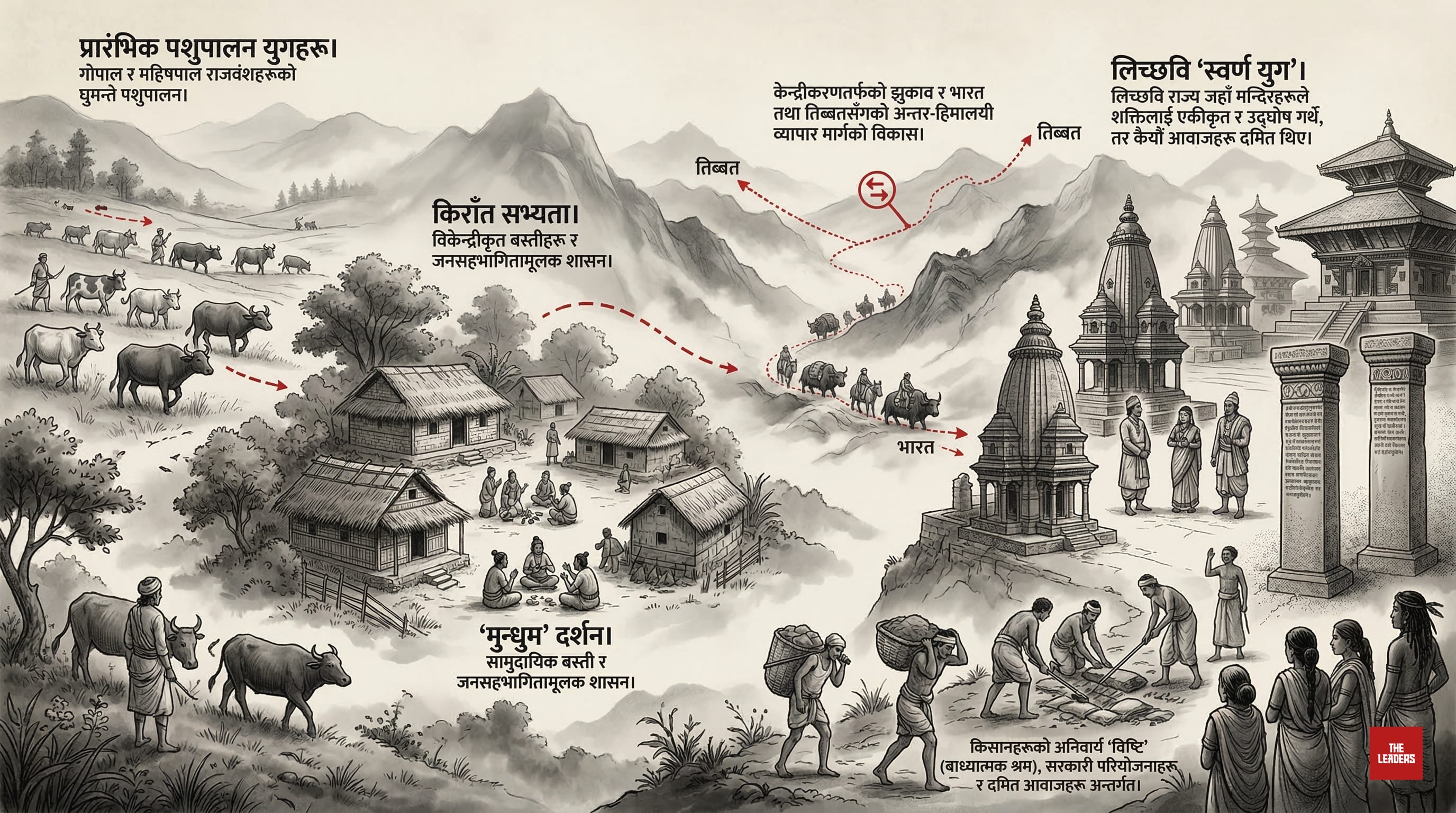
This article serves as a conceptual discourse, analyzing Nepal’s ancient history not merely as a collection of royal genealogies or chronological dates, but as a profound conflict between power, geography, economy, and memory. It encompasses the developmental trajectory starting from the nomadic pastoralism of the Gopalas and Mahishapalas to the decentralized practices of the Kirat civilization, which were rooted in "Mundhum" philosophy and grassroots participation. Furthermore, it dissects the political-economic reality of how the Lichchhavis—bolstered by the unprecedented expansion of trans-Himalayan trade—laid the foundations of a centralized monarchy based on a rigorous taxation system and Bishti (forced labor). By unearthing the silenced voices of grassroots farmers, women, and displaced indigenous communities buried beneath the luster of "Golden Age" Lichchhavi inscriptions, this article opens a gateway for intellectual reflection to understand the political and civilizational identity of modern Nepal through a new lens.
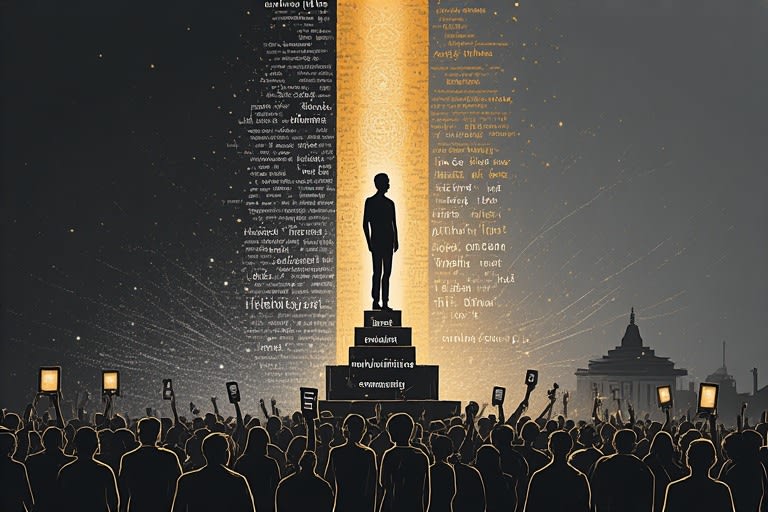
True leadership is defined not by authority or titles, but by a relationship of trust earned through direction, alignment, and commitment. Globally, people value leaders who exhibit self-control, integrity, and transparent communication, viewing a leader’s ability to govern themselves as a prerequisite for governing others. In Nepal, these universal traits blend with the cultural concept of dharma, where leaders are expected to be righteous guardians of a diverse community. However, a significant gap exists between this ideal and the reality of political corruption, leading to a "crisis of legitimacy." This friction peaked in the 2025 youth-led protests, where Gen Z demanded a shift toward digital transparency, personal "cleanliness" from corruption, and inclusion, proving that while authority can be assigned from above, true leadership must be granted from below.
Side-by-Side Edition
...we borrow it from our children.
Active Manifesto Premise
We preserve records so citizens can compare promises with outcomes, year after year.
— The Leaders, 2026
Open Manifesto LibraryCivic Signal Core

Trace the key eras and turning points that shaped Nepal from ancient kingdoms to a federal republic.
The rise of early dynasties and the political groundwork that preceded modern Nepal.
The consolidation of the Shah state and the expansion of unified rule.